Posts

Bharatiya Janata Party (BJP)

Image
 Introduction  Bharatiya Janata Party (BJP) is one of the major political parties in India. Founded in 1980, the party has become a dominant force in Indian politics, winning several state and national elections. The party's ideology is based on Hindu nationalism, cultural nationalism, and economic liberalism. With a strong leadership and a dedicated cadre of workers, BJP has risen to become one of the most influential political parties in India. Ideology of Bharatiya Janata Party BJP's ideology is based on three core principles: Hindu nationalism, cultural nationalism, and economic liberalism. Hindu Nationalism Hindu nationalism is the cornerstone of BJP's ideology. The party believes that India is a Hindu country, and Hindus are the true sons of the soil. BJP's leaders have often spoken about the need to protect Hindu culture and traditions from what they see as the threat of "foreign" religions such as Islam and Christianity. Cultural Nationalism Cultural n...

Narendra Modi

Image
  Introduction: Narendra Modi, the current Prime Minister of India, has been one of the most controversial and impactful politicians in Indian history. Born in 1950 in the western state of Gujarat, Modi rose to power through his tenure as Chief Minister of Gujarat and then became the leader of the Bharatiya Janata Party (BJP) in 2013, before becoming the Prime Minister of India in 2014. Since then, Modi has implemented a series of ambitious policies and initiatives, with the aim of transforming India into a modern, developed nation. In this blog post, we will explore the early life and political career of Narendra Modi, his rise to power, achievements as a leader, impact on India's political and economic landscape, and the challenges and criticisms he has faced during his tenure. Early Life and Political Career of Narendra Modi: Modi was born in Vadnagar, a small town in Gujarat, to a family of grocers. He completed his schooling in Vadnagar and went on to obtain a degree in Politi...

Kashmir

Image
 Understanding the Kashmir Conflict: Historical Context, Current Status, and Paths to Peace Introduction: Kashmir, a region in South Asia, has been a hotly contested area between India and Pakistan for over seven decades. The conflict has resulted in violence, human rights abuses, and displacement of residents, and has implications for regional and global stability. This blog post provides an overview of the historical context, current status, and potential solutions to the Kashmir conflict. Historical Context of the Kashmir Conflict: Kashmir has a diverse cultural and religious background and was ruled by different dynasties throughout history. British colonial rule in India led to the struggle for independence and the formation of India and Pakistan in 1947. The partition of India led to the Kashmir dispute, with India and Pakistan both claiming sovereignty over the region. The conflict led to the first India-Pakistan war in 1947-48 and subsequent military interventions by both c...

Lok Sabha Elections

Image
 "Exercise Your Right to Vote: Understanding the Significance of Voter Participation in Lok Sabha Elections" Introduction: Elections are a cornerstone of democracy, and Lok Sabha elections in India are one of the largest democratic exercises in the world. Every five years, citizens of India come together to elect their representatives to the lower house of Parliament, the Lok Sabha. With Lok Sabha elections around the corner, it is essential to understand the significance of voter participation and the importance of casting your vote. This blog post will delve into the eligibility criteria for voting, the voter registration process, and the significance of voter turnout in elections. Voter Participation and the Importance of Voting: Voter participation is crucial for any democracy to function effectively. By casting our vote, we exercise our right to choose the government that will represent us for the next five years. It is the responsibility of every citizen of India to par...

Ayushman Bharat

Image
 "Revolutionizing Healthcare in India: The Ayushman Bharat Scheme" Introduction: Healthcare is an essential component of human development and is critical to achieving sustainable development goals. India, as one of the world's largest democracies, has been taking significant steps towards ensuring access to quality healthcare for all. Ayushman Bharat, launched in 2018, is one such initiative that aims to provide universal healthcare coverage to millions of Indians. In this blog post, we will explore the key features, benefits, challenges, and future of Ayushman Bharat. What is Ayushman Bharat? Ayushman Bharat, also known as the Pradhan Mantri Jan Arogya Yojana (PMJAY), is a flagship program of the Government of India aimed at providing health insurance coverage to vulnerable and economically weaker sections of society. The program was launched on 23 September 2018, on the occasion of the birth anniversary of Pandit Deendayal Upadhyay. Background and Objectives: The Ayush...

India-Pakistan relations

Image
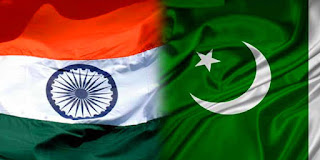
Bridging the Divide: Understanding India-Pakistan Relations Introduction: India and Pakistan share a complex and volatile relationship, characterized by conflict, tension, and occasional attempts at reconciliation. The two neighboring countries have fought several wars, engaged in proxy conflicts, and continue to engage in a nuclear arms race. The dispute over the territory of Kashmir remains a major point of contention, with both countries claiming the region in its entirety. Despite multiple attempts at peace talks and diplomatic efforts, the conflict between India and Pakistan shows no signs of abating, and the security situation in the region remains fragile. Historical Background: The roots of the India-Pakistan conflict can be traced back to the British colonial era, when the Indian subcontinent was under British rule. In 1947, the British government decided to partition India along religious lines, creating the Muslim-majority state of Pakistan and the Hindu-majority state of In...

Women's Safety

Image
 Ensuring Women's Safety: A Collective Responsibility Introduction: Women's safety is a crucial issue that affects millions of women across the world. Despite significant progress in the last few decades, women still face numerous challenges and risks to their safety, both inside and outside their homes. From domestic violence to sexual harassment, assault, and rape, women are often subjected to various forms of violence and discrimination. It is time that we, as a society, take collective responsibility to ensure women's safety and create a world where every woman feels safe and empowered. Understanding the Current Scenario: The first step towards ensuring women's safety is to understand the current scenario. According to the National Crime Records Bureau (NCRB), crimes against women in India have been on the rise in recent years. In 2019 alone, there were over 400,000 reported cases of crimes against women. This statistic is a clear indication of the gravity of the si...